
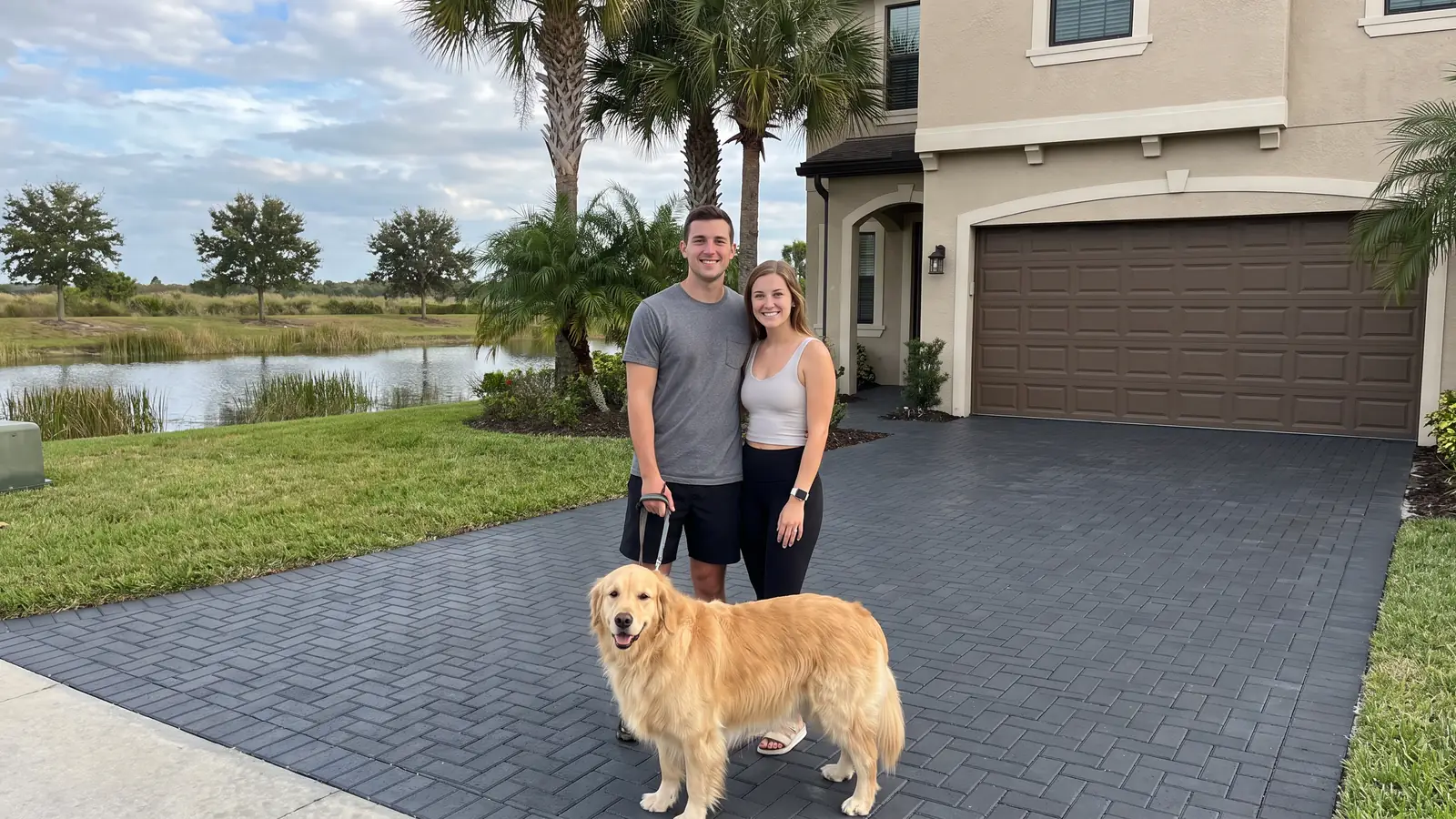
Paver sealing for Panama Park homes
Paver Sealing in Panama Park, FL
From Main Street to Buffalo Avenue, Panama Park pavers can look even again; call (904) 830-5386 for a free estimate.
- Brings out deeper paver color
- Fresh joint sand helps lock pavers in place
- Gives weeds less room to grow
- Makes the surface easier to keep clean
- Free estimate, no obligation
Request a Free Estimate
Free, no obligation.
Fast, careful paver sealing in Panama Park
Paver sealing is available across Panama Park, from the shops on North Main Street to the homes around Buffalo Avenue. Driveways, walkways and patios get cleaned, re-sanded and sealed by a local contractor, and the estimate is free. If you request your free estimate, an answer comes within 1 business day, usually much sooner.
Picture a driveway gone dull gray, with sand missing from the joints and a weed or two along the edge. With a wash, new sand and a fresh coat, those pavers blend back into one steady color. Prefer to talk it through? Call (904) 830-5386 and describe the drive, the walk or the patio.
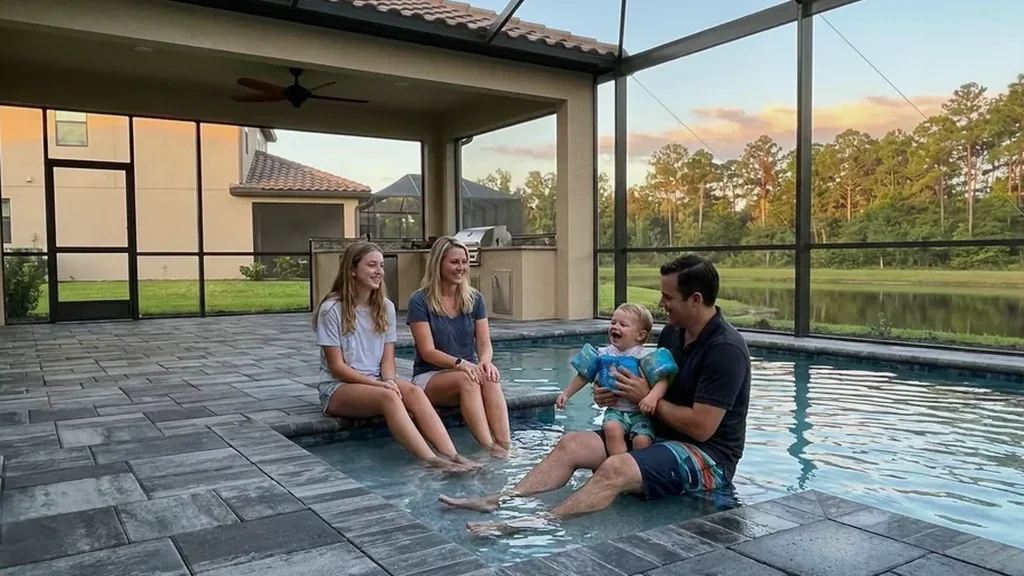
Why hire a local paver sealing contractor in Panama Park?
Panama Park sits between the Trout and St. Johns Rivers, so rain and river water both shape how a paver job should go. A little over half of the occupied homes in the ZIP are owner-occupied, which means many pavers have changed hands. To hear how that applies on your street, request your free estimate.
No-charge walk-around
A local contractor walks your Panama Park lot, looks at every paved surface and quotes a price. Nothing is agreed until you say so.
A price you can check
Northeast Florida firms put $1.75 to $3.25 per square foot in print. A Panama Park quote far outside that range deserves a question.
Short drives, fair math
Smaller jobs cost more per square foot, a Jacksonville cost guide says. Ask how a short Panama Park drive would be figured.
Your call, your date
Choose the day and the style of finish, or decline. A Panama Park estimate commits you to nothing.
Get Your Free Estimate in Panama Park
Tell us about your pavers in Panama Park.
Free, no obligation
What paver problems show up most in Panama Park?
Silt left by the Trout River
During Nicole in 2022, many homes along the Trout River flooded, and one resident said the water reached her windows. Pavers that sat under river water can hold a thin layer of dirt. Sealer would lock that layer in, which means the wash has to come first. Tell the contractor if water ever reached your drive, even years ago. The Trout River is about half a mile wide where Main Street crosses it, so there is a lot of water to rise.
Joints emptied by summer storms
Jacksonville gets about 52 inches of rain a year, mostly from May to September in short, hard bursts. Rain can carry sand out of open joints, which means the joints widen over a few summers. Lost sand lets soil in, and soil gives weeds a place to start. Fresh sand and a coat of sealer hold the joints tight again. Left alone, wider joints also let pavers shift at the edges. Fresh sand held in place by sealer keeps the joints tight through the next storm.
Hard wear at the curb end
A Jacksonville company says driveways take the heaviest wear of any paver surface. Tires turn at the street end of a Panama Park drive, so that part scuffs and sinks soonest. Any dip is repaired before sealing, since a coat laid over a dip keeps the dip. Point out low spots at the first visit so the estimate covers them. Mention low spots when you call so the quote can include the reset.
Green film where shade holds water
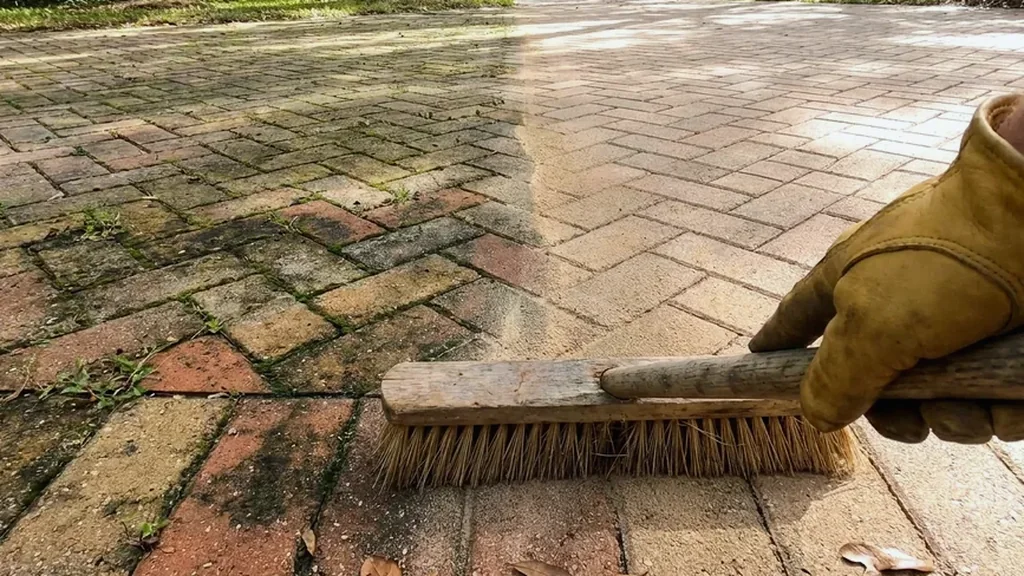
Algae and moss need heavy shade and damp to take hold on pavers. A walkway on the north side of a house, or a patio under a tree, stays wet longer after rain. Those spots need extra washing time, and every bit of the film has to be gone before any sealer goes on. Otherwise the green shows through the coat. Moss and algae need heavy shade, so the strips under trees and along north walls are the ones to watch.
Pavers with no paper trail
Just over half of the occupied homes in ZIP 32208 are owner-occupied, so many pavers here belong to a landlord or a past owner. Nobody may remember the last sealer. Water-based sealer cannot go over solvent-based, so the contractor has to find out what is already there before choosing a product. A receipt, an invoice or a product name from a past owner can save time at the first visit.
What will a contractor see on the streets around Panama Park?
Expect homes and small shops side by side, with North Main Street as the spine. The Jaxson magazine calls Main Street the city's northern gateway before I-95 opened, about four miles north of downtown. A job near that corridor may sit beside buildings from the 1940s and 1950s, which means rinse water needs care near old masonry. Call (904) 830-5386 and mention what is next to your pavers.
ZIP 32208, which covers Panama Park, counted 33,286 people in 2020. Owners live in a little over half of occupied homes, and the rest are rented, so some pavers have changed hands more than once. If your pavers belong to a landlord, you can request your free estimate and share what you know about them. The age of the pavers and any past sealer are the two details worth sharing.
The city park on Buffalo Avenue sits between 59th and 60th Streets and has a splash pad, tennis courts and picnic shelters. Wet pavers and bare feet go together near water. One Jacksonville company says wet-look sealer can be slippery on pool decks, so matte is worth a question. Call (904) 830-5386 and ask which finish fits a patio where kids play.
What does paver sealing cost in Panama Park?
The going rate firms in Northeast Florida put in print is $1.75 to $3.25 per square foot for a clean, sand and seal. A Jacksonville cost guide says smaller projects cost more per square foot, so a short Panama Park drive can land higher in the range than a long one. A walkway and a patio measured in with the driveway raise the total, though not always the rate. If you want a number for your own lot, request your free estimate, and the visit is free.
Prep moves the number. Silt, green film and thin joints each add washing or filling time, and a dip to reset or a failed old coat to remove adds more. Narrow side yards add carrying time too. Ask by calling (904) 830-5386, and the contractor can say which of these fit before any work begins.
| Paved area | Typical example | Clean, sand and seal |
|---|---|---|
| 300 sq ft | Small patio or walkway | $525 to $975 |
| 600 sq ft | Two car driveway | $1,050 to $1,950 |
| 1,000 sq ft | Large driveway or pool deck | $1,750 to $3,250 |
| 1,500 sq ft | Driveway plus pool deck | $2,625 to $4,875 |
Math based on the $1.75 to $3.25 per square foot that Northeast Florida paver companies published as of November 2026. Your contractor sets the actual price after seeing the surface. Repairs, leveling and stripping failed sealer are usually extra.
How does a paver sealing job work in Panama Park?
Size up the lot
Before any water is sprayed, the contractor walks the Panama Park property. Low corners, sunken spots and shaded strips are noted, and the old coat is identified if possible. Repairs come ahead of sealer, because a coat over a dip keeps the dip. Tell the contractor about any past flooding too. The notes become the quote, so nothing is a surprise later.
Clear the silt, the green and the grime
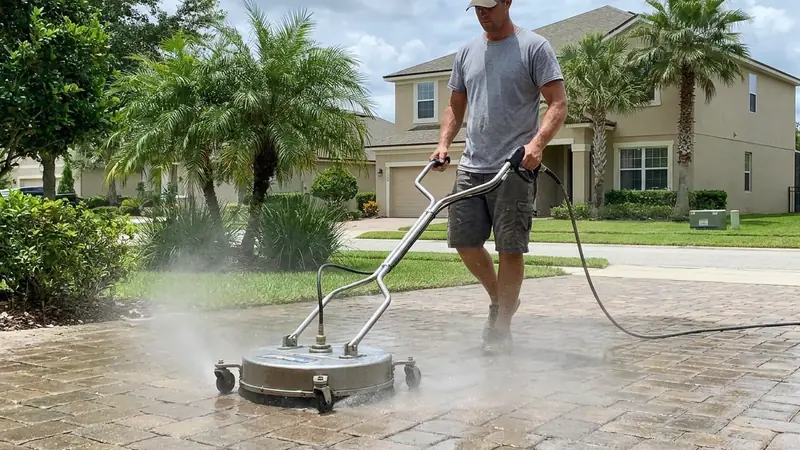
Washing lifts the thin dirt left by river water, the green film from shaded edges and rubber from the curb end. Heavy shade near trees takes longer. Joint sand leaves with the dirt, which sets up the next step. Rinse runoff is steered away from doors and plants. A cost guide says tree-shaded patios need extra cleaning time, so a shaded strip may get a second pass.
Refill the joints
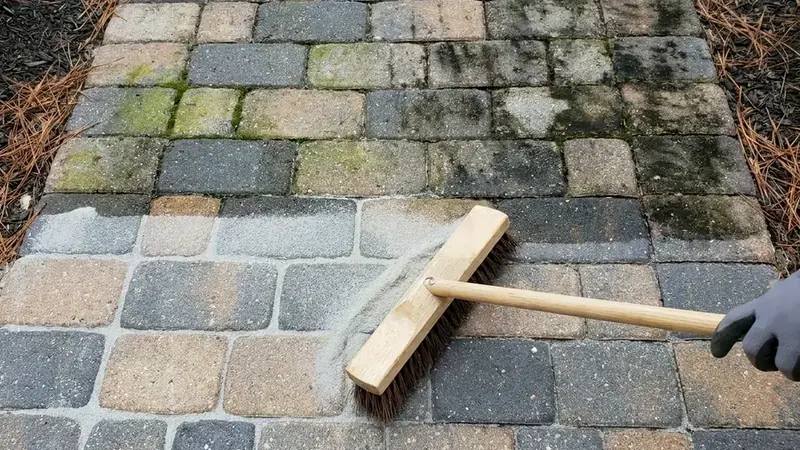
New sand is swept into every joint until it is full. This matters on the deep sand found across Duval County, where open joints let soil in and weeds follow. Sand goes in ahead of the sealer, not after it. A bit more may be needed along the edges. Edges beside the lawn get a second look for gaps.
Let everything dry
Rain here comes in short, hard bursts, and a shaded walkway can stay wet for hours. Sealer wants a dry surface, so the contractor checks the forecast. Most cloudy or white sealer comes from sealing damp pavers, one Jacksonville company reports. The date moves if it has to. Ground near the Trout River can stay damp after high water, so the low end of the drive is checked last.
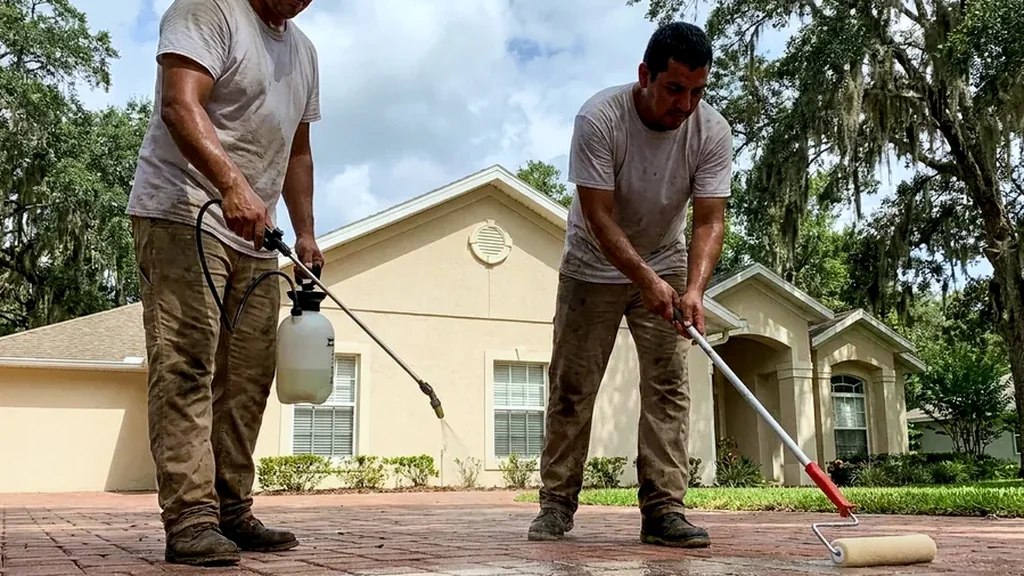
Spray, roll and keep off
The sealer is sprayed on and then worked into the joints with a back-roller. On a wet look, scuffs appear sooner than they do on matte. Count on two to five years from coat to coat, which is what companies commonly quote. A few hours before walking and about a day before parking is the usual guidance, one Jacksonville company says. Ask for the product name before the contractor leaves, so a later coat can match.
Complete paver services in Panama Park
Think of a Panama Park job as four tasks in a row. First comes a wash for silt and green film, then new sand in the joints, then drying time, then sealer. Doing them in that order keeps dirt from being trapped under the coat. Call (904) 830-5386 to hear how the contractor would time it on your lot.
Each surface wears in its own way. The end of a driveway near the curb takes the turning tires, a walk beside the house stays damp, and a back patio collects leaves. Tell the contractor about all three when you request your free estimate, and the quote can cover each one.
Finish comes down to taste and traffic. Matte looks calm on an older house, while a wet look makes color richer and shows scuffs earlier. Anything near a splash pad or pool is better matte, since gloss can turn slick. Before choosing, call (904) 830-5386 and describe how your family uses the space.
Weather sets the calendar. Jacksonville's rain arrives mostly between May and September, and shaded Panama Park yards hold water longer than sunny ones. A contractor will wait for pavers to dry rather than seal them damp. To see which days could work near you, request your free estimate.
Questions to ask before you hire
- Is fall or winter a good time to seal here, or should I wait for spring?
- Will you text me when you are on the way?
- Will bike tires and sidewalk chalk leave marks on the sealed pavers?
- What would you charge to come back and touch up one spot a year from now?
- Do the people working at my house carry workers' comp as well as liability coverage?
- Do you clean the curb and the sidewalk in front of the house, or is that extra?
- How will I know the sealer is fully cured, not only dry to the touch?
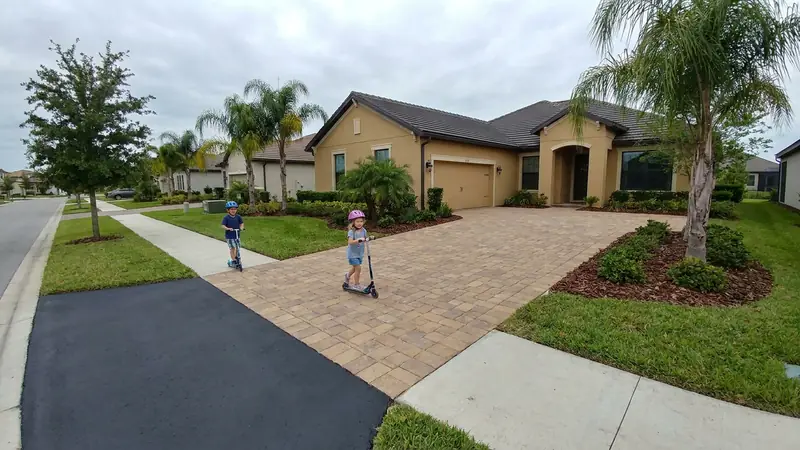
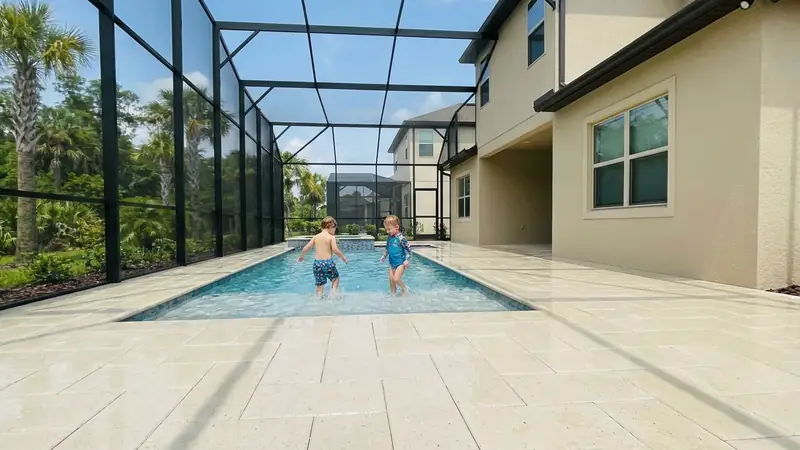
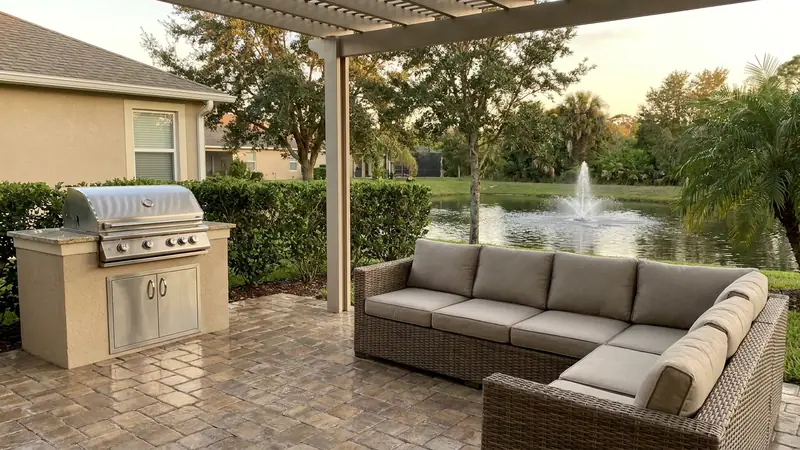
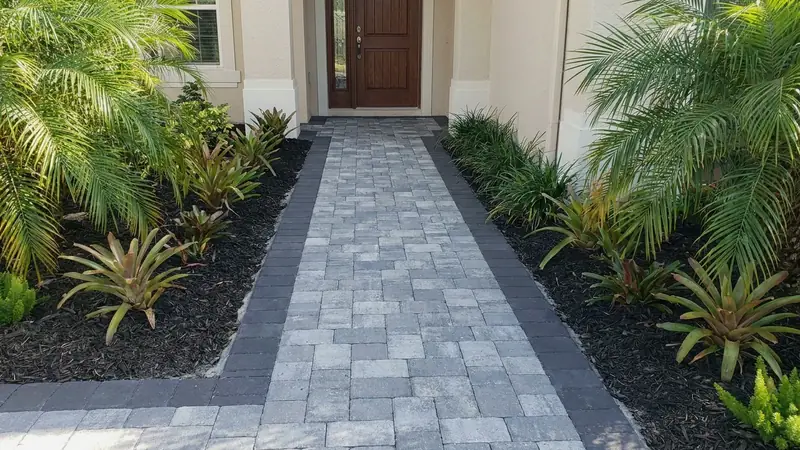
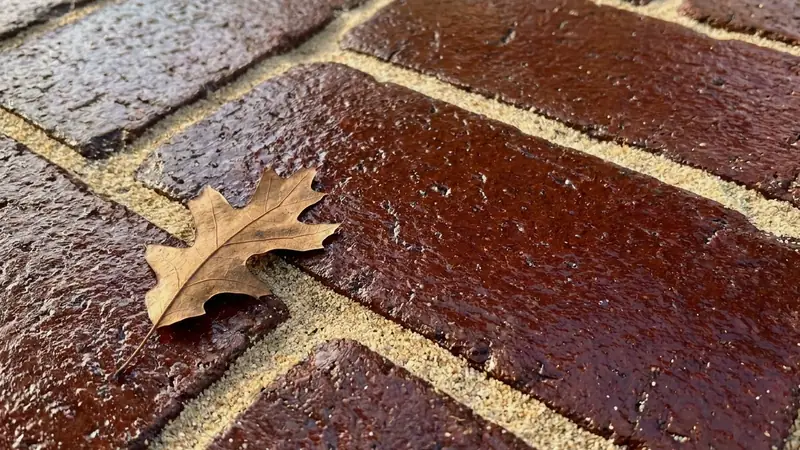
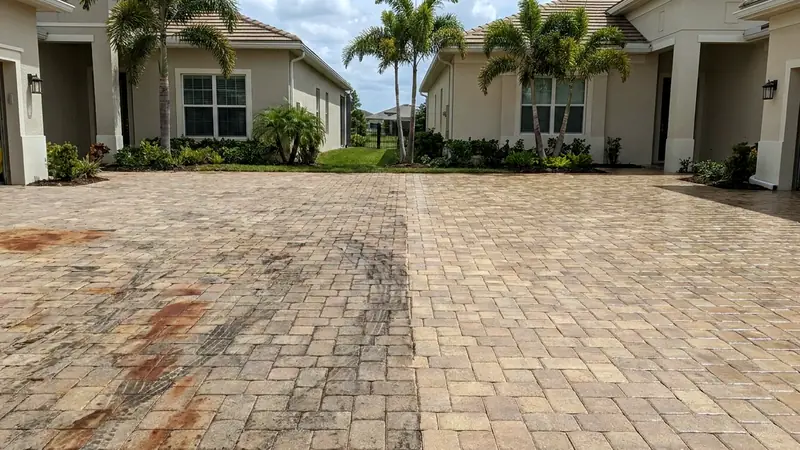
What do sealed pavers look like around Panama Park?
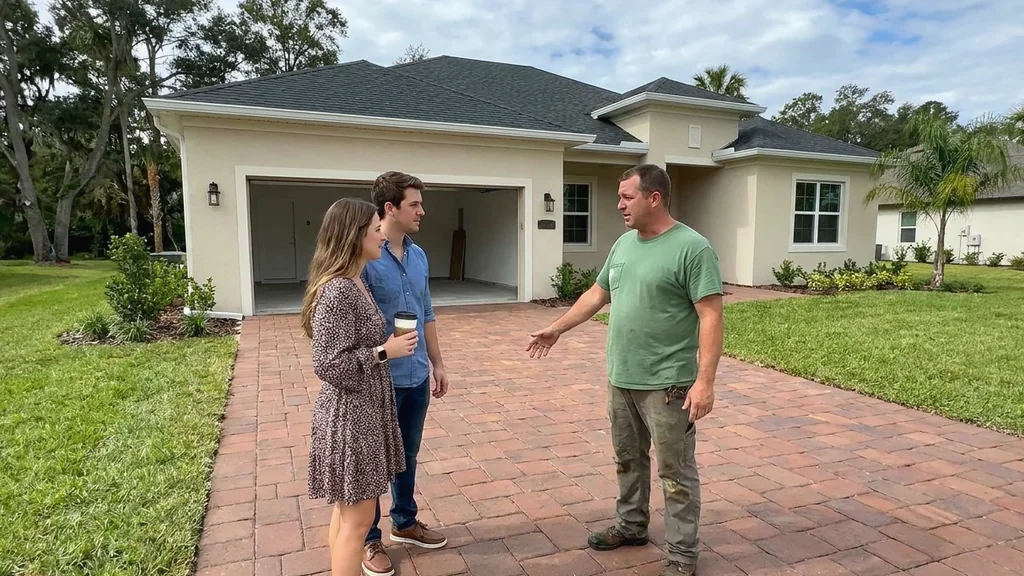
Why local matters in Panama Park
Ask a Panama Park contractor one question and you learn a lot: did the Trout River ever reach your lot? The answer decides how long the wash takes. Someone new to the Northside may not ask. For a contractor who works near the Trout River, call (904) 830-5386.
The river is about half a mile wide at Main Street, and storms can push water up it fast. That makes the forecast part of the plan, along with the low end of your drive. To hear how a contractor works around both, request your free estimate. Ground near the river can stay wet after storms.
Pavers in this part of Jacksonville come in many ages, laid by many owners. A contractor who works here expects old coats and sand that has moved. If that sounds like your yard, request your free estimate and share roughly when the pavers went in. That saves surprises on the day.
Is Panama Park an old neighborhood, and does that matter for my pavers?
Yes, and the age shows along North Main Street. Panama Park Pharmacy has been there since 1928, Joseph's Pizza since 1956, and Howard's Department Store went up in 1954. Homes near that corridor can carry old coats, patched joints and added walkways. If you are near it, request your free estimate to ask about your pavers.
Near the water, the old Trout River bridge pier dates to 1930, and the current swing bridge to 1938. Buffalo Avenue holds the city park, where the city bought land in 1929 and finished a big upgrade in 2003. The Joseph Community Center, now a senior center, stands across from it. Near these Panama Park landmarks, call (904) 830-5386 and name your street.
Frequently Asked Questions
What is the average cost to seal pavers in Panama Park?
A clean, sand and seal runs $1.75 to $3.25 per square foot, going by what Northeast Florida companies publish. Silt, lost sand and an old coat decide where a Panama Park job lands. Have the quote list the total area, then check it against that range.
How much does it cost to seal outdoor pavers on a small Panama Park lot?
Small lots often cost more per square foot, a Jacksonville cost guide says, because setup time is spread over less area. Ask how a short drive and a walkway would be priced together. A patio can sometimes be measured in with them.
Is it good to seal pavers in Panama Park?
Mostly yes. Sealer holds sand in the joints, which cuts down on weeds, and it protects color. The tradeoffs are upkeep and timing, since a coat wears and needs a dry day to go on. Rain and shade make that second part the one to plan for here.
How often do you seal pavers in Panama Park?
Count on two to five years from coat to coat, which is what companies commonly quote. A drive with daily tires and full sun sits near the short end, while a shaded walk can stretch longer. A bead of water on the surface shows the coat is working.
Can pavers be sealed after Trout River flooding in Panama Park?
Yes, as soon as they are clean and fully dry. Floodwater leaves a thin layer of dirt, and sealer would lock it in. The contractor washes it off and replaces lost joint sand first. Point out the low end of the drive at the first visit.
Do pavers need new sand before sealing in Panama Park?
Almost always. Washing pulls sand out of the joints, so new sand goes in before the coat. Duval County ground is deep sand, and open joints let soil in and weeds follow. Sealer then keeps the sand in place.
Wet look or matte near the Panama Park splash pad?
Matte is the safer pick near water. Wet-look sealer can be slick on a pool deck, one Jacksonville company says, and it shows scuffs earlier. A wet look suits a quiet walkway better than a busy drive.
Can my Panama Park pavers be sealed if I do not know what is on them?
Yes, but the contractor has to find out first. A water-based sealer will not go over a solvent-based coat. If you rent, ask the landlord for a receipt or product name, since either can settle the question quickly.
Will sealing stop weeds along my Panama Park driveway edge?
It helps. Wide joints that have lost their sand let soil in, and weeds start there. Fresh sand held in place by sealer keeps the joints tight, though a joint that is already wide needs sand first.
Why does sealing cost what it does in Panama Park?
Prep takes up most of the price, more than the sealer does. Washing off silt and green film, refilling joints and repairing dips all take hours. Add the published range of $1.75 to $3.25 per square foot, and you have a fair starting point.
Should new pavers in Panama Park be sealed right away?
No, give them time first. A Jacksonville paver company puts the wait at 30 to 60 days after installation, which lets efflorescence work out of the surface. Then the joints get filled and the first coat is applied. The installer can tell you the start date.
What if sealer turns white on my Panama Park pavers?
Haze usually means the pavers were damp or the coat went on thick, a Jacksonville company says. Shaded Panama Park walks dry slowly, so watch for it here. Tell the contractor when you first see it.
Nearby areas we serve
Ready for a Free Estimate in Panama Park?
Call (904) 830-5386 and tell us about your pavers.
Free, no obligation