
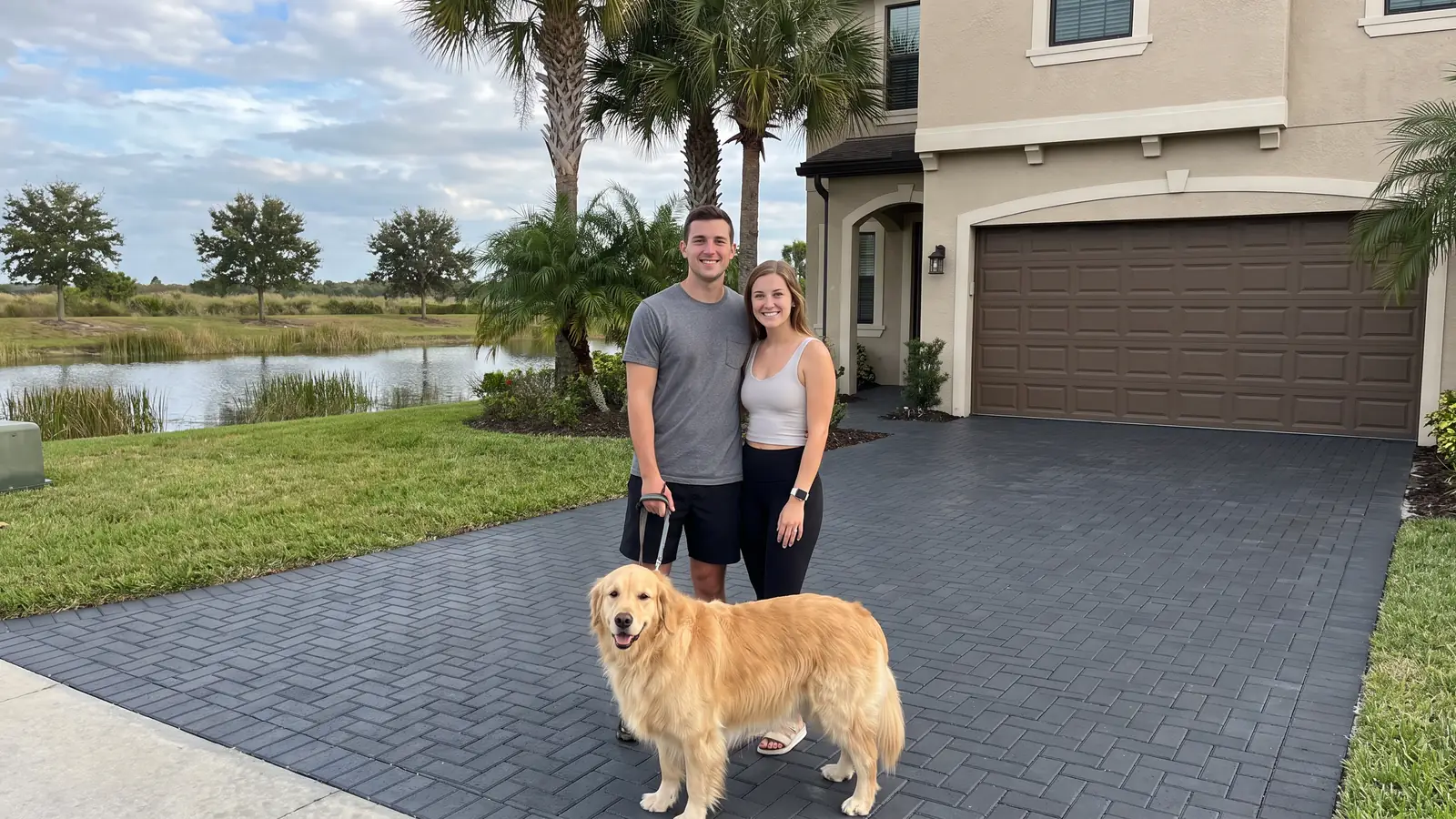
Paver sealing for San Jose homes
Paver Sealing in San Jose, FL
San Jose was planned with paved sidewalks on every street, so call (904) 830-5386 to keep your pavers looking sharp.
- Brings out deeper paver color
- Fresh joint sand helps lock pavers in place
- Gives weeds less room to grow
- Makes the surface easier to keep clean
- Free estimate, no obligation
Request a Free Estimate
Free, no obligation.
Fast, careful paver sealing in San Jose
Paver sealing is available across San Jose, from the streets near San Jose Boulevard to the quiet lanes by the St. Johns River. Cleaning, fresh joint sand and sealer for driveways, courtyards, walkways and pool decks come from a local contractor, and the estimate is free. Use request your free estimate and an answer arrives inside 1 business day, usually much sooner.
Courtyard pavers can go gray and spotted under the oaks, and a drive sealed years ago can fade unevenly. Washing, joint sand and a new coat restore one steady color. Call (904) 830-5386 and describe what you see. The call carries no pressure, and no one will ask you to decide.
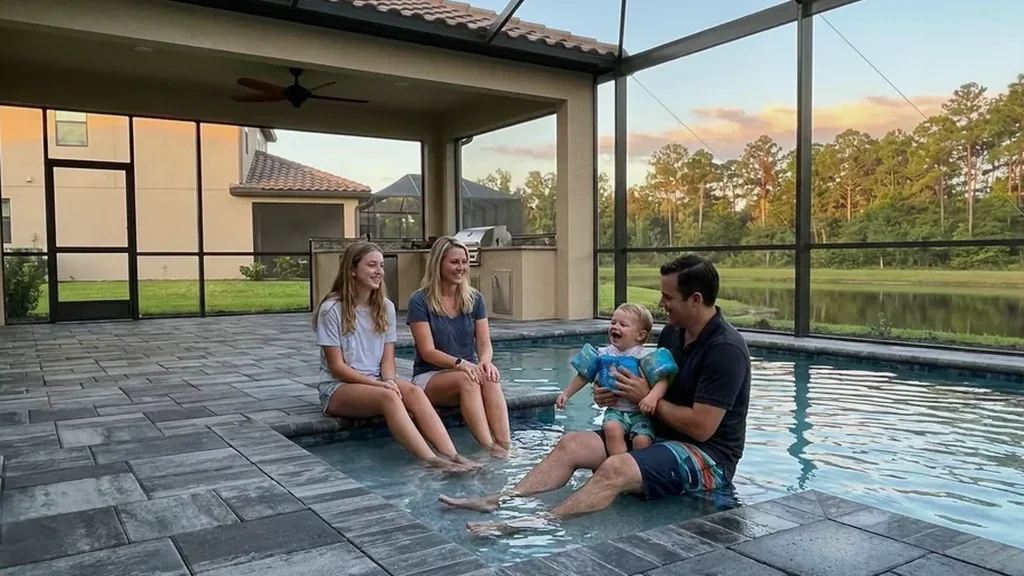
Why hire a local paver sealing contractor in San Jose?
Historic streets, gated communities and river weather all shape a job in San Jose, so homeowners here tend to call a local contractor. To see how they apply to your address, request your free estimate.
A free look at your property
The contractor measures your San Jose drive, courtyard and pool deck at no charge, then writes down the price and every step. Photos from your phone are welcome ahead of the visit. It also helps to mention gate codes.
A range to hold up
Printed prices around the First Coast run $1.75 to $3.25 per square foot to clean, sand and seal. Use it to check any quote you receive.
Help with approvals
Historic districts and associations may ask for details. The contractor can give you sealer and finish information to send along with a request.
You stay in charge
San Jose estimates leave the decision with you. Pick the finish and the date, and take your time comparing quotes.
Get Your Free Estimate in San Jose
Tell us about your pavers in San Jose.
Free, no obligation
What paver problems show up most in San Jose?
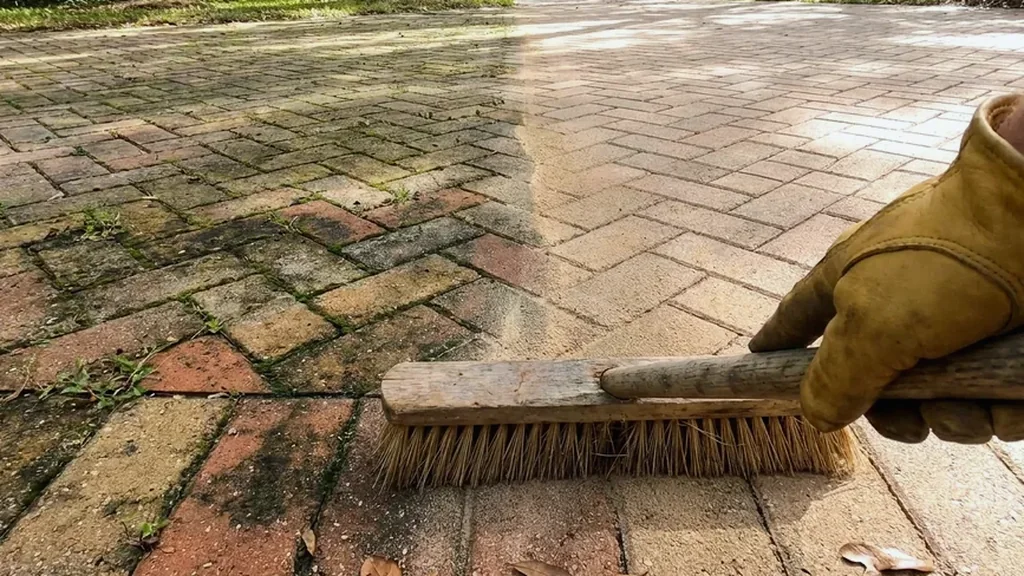
Gray, spotted courtyards
San Jose homes range from small wood-frame starters to waterfront mansions, in styles that include Spanish Revival bungalows and midcentury ranches. If your home has a courtyard, entry walk or pool deck with pavers, algae and dirt settle into the joints and leave spots. A wash and a sealed surface bring back an even color. Steps and corners get the same care, since they stay damp longest. Ask for them to be named in the quote. Corners and steps often hold the most dirt, so ask that they be treated by hand. Pool decks need extra care around slick spots, so the contractor may suggest a finish with more grip. San Jose's 1925 plan gave every street paved sidewalks and named them for Spanish cities. A front yard here often has plenty of paving to look after.
Shade under big oaks
Large oaks with draping moss shade the lawns at most San Jose homes. Oak shade keeps courtyards cool, and cool, damp pavers turn green. A paver in open sun dries out sooner. The contractor cleans first, waits for a full dry, then seals. Green film is slippery, which makes cleaning a safety step too. Pavers under heavy shade may need a second wash, which the contractor will tell you about. Old oaks also drop leaves and limbs, so a quick brush now and then keeps the joints clear.
River tides and storm water
Near Jacksonville the St. Johns River is an estuary, with saltier water and a strong tidal pull. In 2017, Hurricane Irma arrived on the tails of a nor'easter that had already backed up the river, and water went into neighborhoods. Pavers that sat in river water can hold silt in the joints. That silt is washed out before sealer goes on, or the sealer would trap it. Tell the contractor if your yard took water. If you saw water standing on your yard after a storm, a photo helps. If your yard sits low near the water, allow extra drying time after rain. Tides push the same river water up and down the St. Johns every day, so low yards near the bank can stay damp.
Fast-draining sand that still shifts
The USDA Ortega soil series in Duval County is deep fine sand with rapid permeability. Water leaves quickly, but downspouts and low corners can still concentrate flow. Fast runoff from a downspout can carry away the bedding sand under a paver. Rain falls hardest from May to September, so a reset of any dropped paver comes before sealing. Point out any dips you have noticed on your first call. Ask the contractor to look at the base under any paver that has dropped.
Rules that can touch exterior work
Under city rules, work on a local landmark or inside a local historic district, driveways included, needs a Certificate of Appropriateness first. San Jose also holds gated communities and planned developments, each with its own association. The city's Land Development Map lets you look up your address, so check it and your own rules before you pick a finish. The contractor can supply product details, so the paperwork is quick. Having your rules on hand when you call speeds up the plan. Gated communities often keep their own guidelines on file, and an early question to the office can save a week.
Do you seal pavers in gated and historic San Jose communities?
Yes, a local contractor can seal pavers in San Jose's gated communities, planned developments and older streets. Epping Forest is a 58-acre riverfront estate off San Jose Boulevard whose mansion dates to 1927 and whose grounds became a gated community. Houses on Via de la Reina were added to the National Register of Historic Places in 1985. Call (904) 830-5386 and say where you live, so access can be planned ahead of the visit.
San Jose Estates was planned in 1925 with 1,911 lots and streets named for Spanish cities. It also gave every street paved sidewalks, which was unusual then. After 1947, post-war subdivisions filled in the undeveloped parts, so homes here date from many eras. You can request your free estimate and mention your home's age, since the age of the pavers shapes the plan.
Goodbys Creek Preserve is at 9145 San Jose Boulevard, and Goodbys Creek roughly divides San Jose from Mandarin. The Bolles School and San Jose Country Club are landmarks along the same boulevard. If your property sits in a historic district or under an association, read the rules first. Call (904) 830-5386 if you want help working out what to send with a request.
What does paver sealing cost in San Jose?
Typical First Coast pricing sits at $1.75 to $3.25 per square foot for clean, sand and seal. A large San Jose courtyard or pool deck adds up in square feet, and old sealer that must be stripped adds more work. Stains, silt and repairs matter too, and each shows up as a line on the quote. You can request your free estimate and ask which of these apply to you.
Gate time and access count too. A job inside a gated community may need a guest list or set hours, which the quote should show. Large courtyards and pool decks lower the cost per foot, and small walks raise it. Call (904) 830-5386 with a few measurements and ask how your courtyard or drive fits the range.
| Paved area | Typical example | Clean, sand and seal |
|---|---|---|
| 300 sq ft | Small patio or walkway | $525 to $975 |
| 600 sq ft | Two car driveway | $1,050 to $1,950 |
| 1,000 sq ft | Large driveway or pool deck | $1,750 to $3,250 |
| 1,500 sq ft | Driveway plus pool deck | $2,625 to $4,875 |
Math based on the $1.75 to $3.25 per square foot that Northeast Florida paver companies published as of November 2026. Your contractor sets the actual price after seeing the surface. Repairs, leveling and stripping failed sealer are usually extra.
How does a paver sealing job work in San Jose?
Walk the property
A local contractor walks your San Jose grounds and measures the courtyard, drive, walks and any pool deck. Gates and entry hours are noted, along with sunken pavers, old sealer, silt, stains and green film. You leave with a written price, and an association can see it if it must approve the work. Questions about neighbors and hours are welcome. If your community sets visiting hours, share them when you first call.
Raise what sank
Pavers that sank or lifted are reset first, since a coat applied over a dip simply locks the dip in. Edges near planting beds and the pool coping get firmed up. A level surface sheds rain instead of holding it, which slows algae. Loose pavers near steps get the first look, since they cause trips. Any paver beyond saving is replaced with a close match.
Rinse and rest
Then comes the wash, with silt, rust, oil and green film treated. Pavers must dry fully, since sealer on a damp surface can turn white or blotchy. Shaded courtyards may need a longer rest, and the contractor lets you know the revised day. A dry joint matters as much as a dry face. Runoff from the wash is steered away from beds and the pool.
Pack the joints
Washing clears out the old sand, so fresh sand is worked in until the joints are packed. Packed joints hold each paver in place, and the sand color is picked to match. Extra sand is brushed off before any sealer goes on. Wide joints can take a second pass, which the contractor will tell you about.
Coat and cure
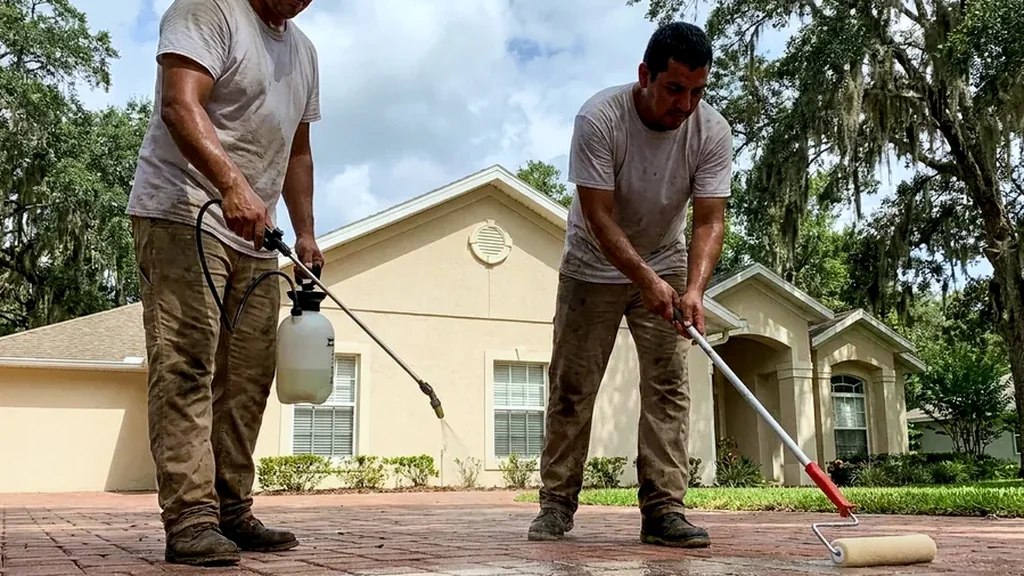
A sprayer lays the sealer down, and a roller follows to push it into the joints. Walking on it is usually fine within a few hours, while cars stay off for roughly a day. Keep the sprinklers and the bikes clear until the coat has cured. A look a day or two later confirms an even finish. Ask for the product name in writing, which helps with any later touch-up.
Complete paver services in San Jose
Five stages make up the work: inspect, repair, wash, sand, seal. On San Jose properties the wash gets extra time wherever river silt or green film has built up. Sunken pavers are reset first, and the joints are refilled before any sealer goes on. Get the stages on paper when you request your free estimate, so plans are easy to compare.
A grand entry drive takes tire wear, while a courtyard or pool deck takes sun, water and bare feet. Walks fall somewhere between the two. Each surface gets its own sealer and finish, not one choice for the lot. Describe each area when you call (904) 830-5386.
A solvent-based coat from years back rules out a water-based topcoat, so an older coat matters. A contractor may offer wet look high gloss, wet look satin, natural matte or a penetrating sealer for natural stone. Gloss shows scuffs sooner, and matte stays natural. Ask for a test patch before you request your free estimate.
Shaded courtyards can dry slowly after rain, and sealer needs a dry surface. People can walk on it after a few hours, while cars wait for roughly a day. Keep the sprinklers and any pool splash-out off the surface until the contractor clears it. Call (904) 830-5386 and ask for a window with several dry days.
Questions to ask before you hire
- Do you clean the curb and the sidewalk in front of the house, or is that extra?
- Can you take paint drips off my pavers before the sealer goes on?
- Will bike tires and sidewalk chalk leave marks on the sealed pavers?
- Will you text me when you are on the way?
- Do you seal the front steps and the porch landing, or only the flat areas?
- What would you charge to come back and touch up one spot a year from now?
- If my neighborhood has a gate, do I need to add your name to the guest list?
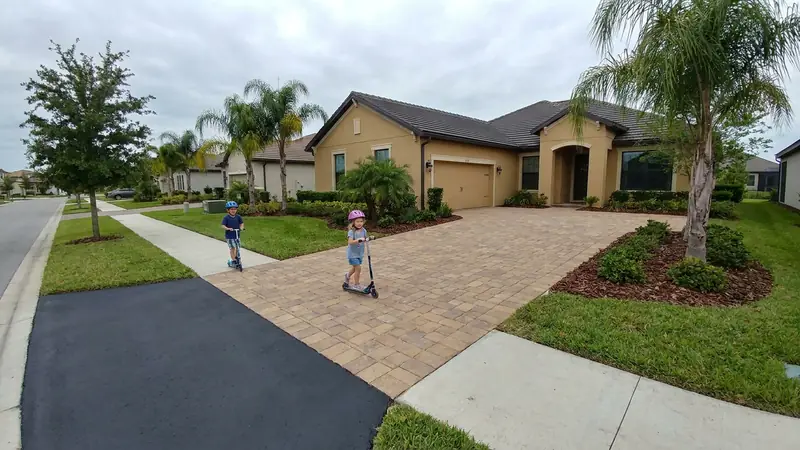
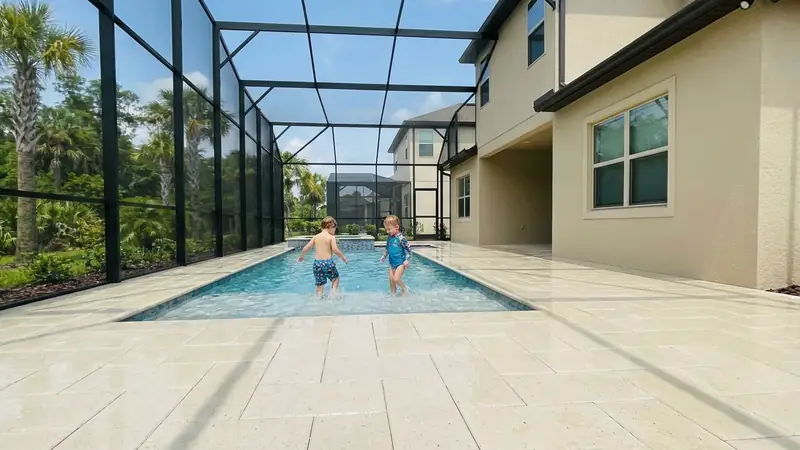
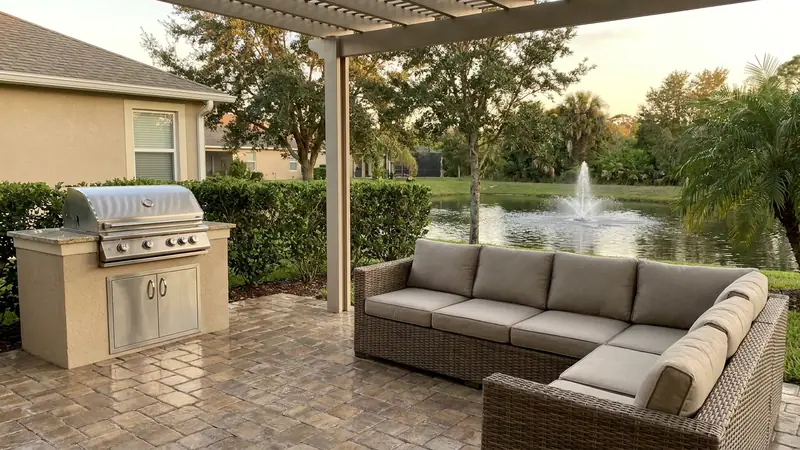
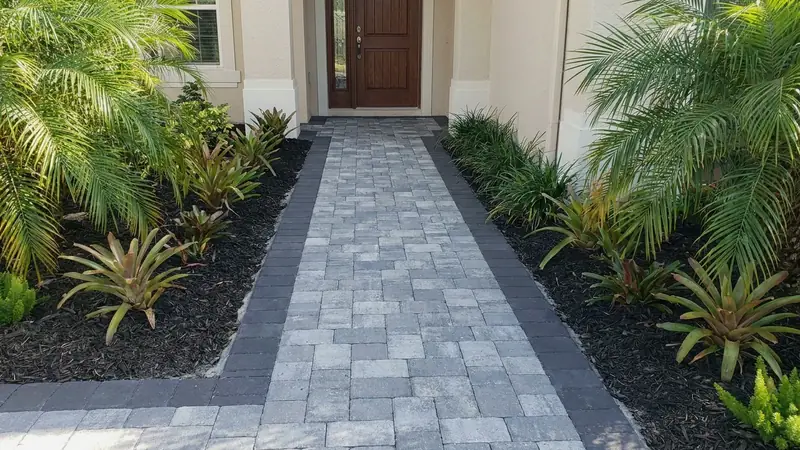
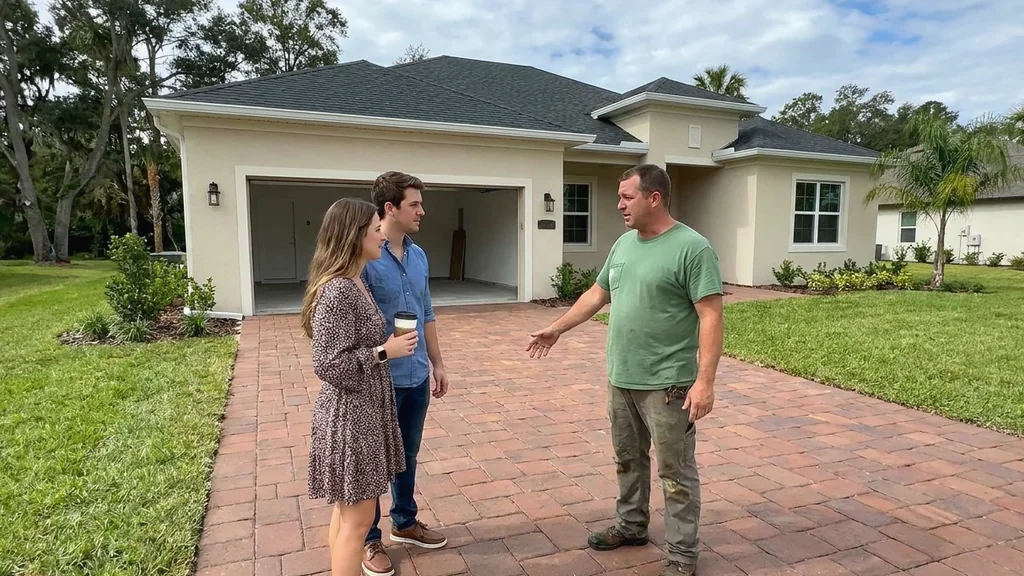
What do sealed pavers look like around San Jose?
Why local matters in San Jose
A contractor who works on the Southside knows how San Jose is laid out. San Jose Boulevard is the main parkway, with the river to the west and University Boulevard to the north. A nearby crew can often reach your address sooner. Call (904) 830-5386 and ask which day a visit could happen.
Gates and associations are the second local factor. Epping Forest and other planned communities have their own rules for contractors. A local crew is used to planning around guest lists and entry hours. If your community needs a vendor name or details in advance, request your free estimate and say so up front.
Home age is the third. Some San Jose homes date to the 1920s, while others came after 1947. Older homes may have older pavers with older coats. Share what you remember about past sealing when you call (904) 830-5386, even a rough year, and the plan will fit your surface.
What is the story behind San Jose's streets and homes?
San Jose began as a planned community, designed by John Nolen with a golf course by Donald Ross. Its first phase sold out by August 10, 1925, and when building stopped in 1926 only 37 structures stood. By 1928 just 31 homes had been built. Call (904) 830-5386 if you want to talk about the age of your own home and pavers.
In 1947 Stockton, Whatley, Davin and Company bought most of San Jose and re-platted the lots. Post-war subdivisions then filled in the undeveloped parts, which is why one street can hold homes from different decades. The Bolles School and San Jose Country Club still sit along the boulevard. For a clear read on your pavers, you can request your free estimate and ask about the courtyard first.
Frequently Asked Questions
Why does sealing a San Jose courtyard cost what it does?
Labor is the bulk of the price. That covers a visit, resets, a wash, stain care, fresh sand and time for everything to dry. Sealer is a small share of the bill. On a large San Jose courtyard, that is a lot of surface to prepare. Ask for each line on the quote to be explained, so the price makes sense.
What does it cost to re-sand and seal pavers in San Jose?
Pricing here follows the First Coast norm of $1.75 to $3.25 per square foot for clean, sand and seal. New sand is included, because the wash empties the joints. Your number depends on size, old sealer and stains. Ask for it itemized, so each line is clear.
What water-based paver sealer suits San Jose pavers and stone?
Ask the contractor to name the product and explain why it suits your pavers or stone. If your surface was sealed before, say so, because that earlier coat limits the choices. A test patch in the courtyard shows the finish before the rest is done.
How long does a paver coat last on a San Jose drive?
Paver companies usually put the life of a coat at two to five years. Sun and tires age a drive sooner than a shaded courtyard. Sprinkle water on a courtyard paver, and if it soaks in, plan the next coat. Test a few spots each year.
Does sealing San Jose pavers in a historic district take city approval?
Possibly. A Certificate of Appropriateness is the city's approval for exterior work in a local historic district or on a landmark. Driveways count as site work. Plenty of homes fall outside the rule, so a quick lookup saves guesswork. Owners with doubts can ask the city office first. Many homes are not covered, so a short check saves guesswork.
Does my San Jose HOA need to approve a sealer or finish?
It might. A Florida statute limits an association's review of appearance to what its declaration or published guidelines say. Read yours, then ask the contractor for product and color details to attach to a request. Sending that information early can save a week of back and forth. An early yes from the board keeps the job on your calendar. If your association has a vendor list, ask the contractor to confirm.
Can pavers that sat in river water be sealed in San Jose?
Yes, after a deep wash. River or storm water can leave silt in the joints, and sealer would trap it. The contractor clears it, replaces the sand, lets the surface dry and then seals. Mention the date the water came in, if you know it. Pavers that shifted in the water are reset before sealing.
How fast will I hear back after asking about San Jose paver sealing?
Look for an answer inside 1 business day, usually much sooner than that. The estimate costs nothing and brings no obligation. You pick the date and the finish. A quick answer starts things off, and you decide how fast to go from there. Ask as many questions as you like before agreeing to anything.
Ready for a Free Estimate in San Jose?
Call (904) 830-5386 and tell us about your pavers.
Free, no obligation